
Best and Worst Exercises for Parkinson's
Not every workout format is equally useful for Parkinson's. This guide breaks down which formats tend to support motor function, which carry more risk, and why individual response varies.
This guide reflects general training principles and is not medical advice. Exercise decisions for Parkinson's should be made in coordination with a physician, neurologist, or physical therapist.
There is no single best exercise for Parkinson's. There is a best exercise for this specific person, given their current motor symptoms, balance level, and medication timing, and that answer shifts as the condition progresses. What follows is a general framework for which formats tend to help and which deserve more caution, with the understanding that individual response varies significantly.
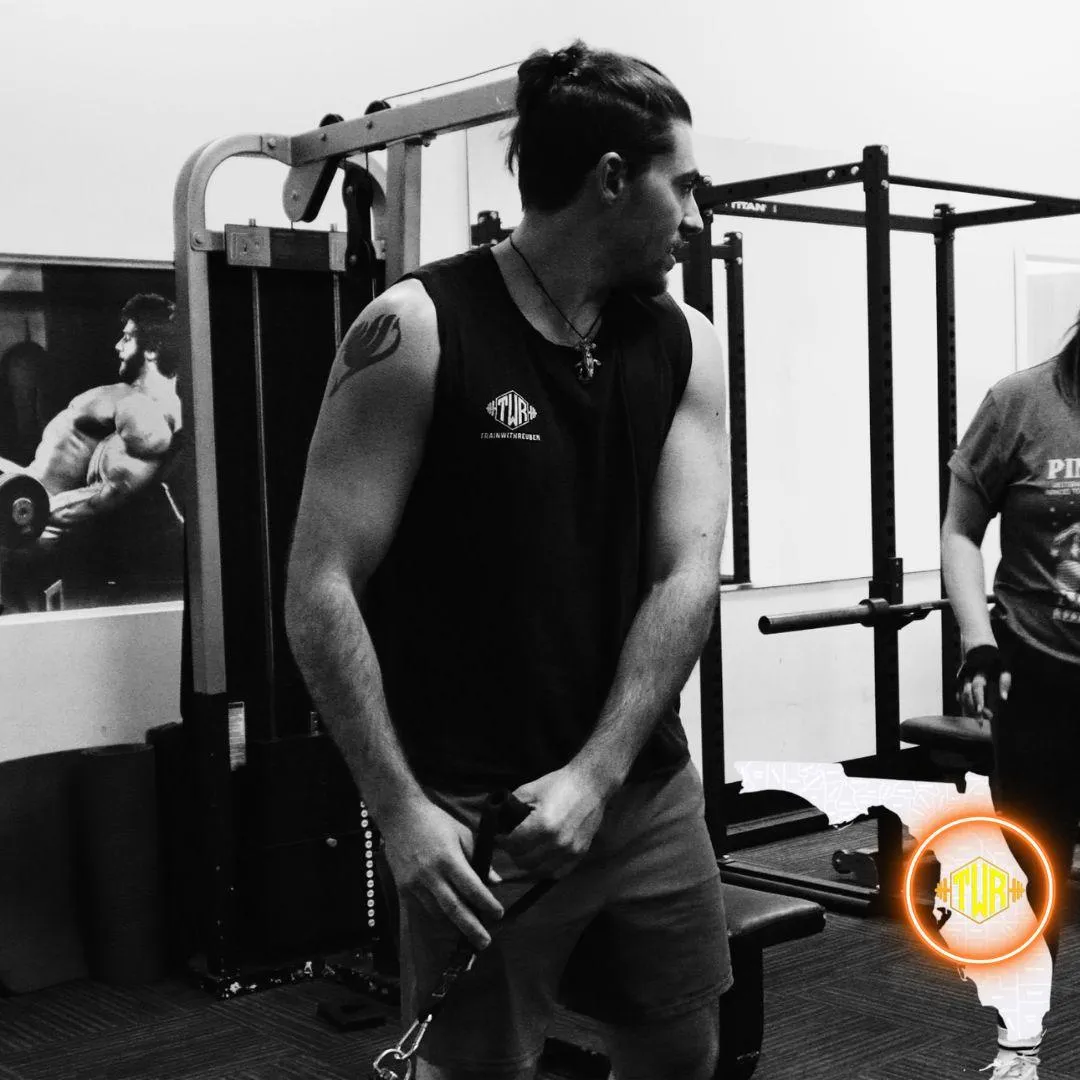
Strength Training Generally Helps
Resistance training is a core part of most Parkinson's-adjusted programs. Maintaining muscle mass and strength supports functional movement, the kind needed for standing from a chair, climbing stairs, and general daily independence, and strength work tends to be adaptable to a wide range of symptom severity through adjustments in load, position, and range of motion.
Seated or supported strength work is often the right starting point for clients with more significant balance concerns, with a progression toward standing and less supported positions as confidence and stability build. This progression should be guided carefully rather than rushed, since standing strength work introduces balance demands that seated work does not.
Rhythmic and Large-Amplitude Movement Tends to Help
Exercise formats that emphasize large, deliberate movements, boxing-style training, dance-based movement, and rhythmic activities like walking to a beat, are commonly used in Parkinson's-focused exercise programs and often show up in client feedback as genuinely helpful for movement quality. These formats tend to work on amplitude and coordination in ways that smaller, more restricted movements do not.
This is not a claim that any single format reverses or slows disease progression. It reflects that many clients report better movement quality and confidence with formats built around bigger, more deliberate motion, and that these formats tend to be engaging enough that clients actually stick with them.
Balance Work Deserves Careful Progression, Not Avoidance
Balance training is one of the more valuable things a program can offer a client with Parkinson's, given how directly it connects to fall risk and daily independence. It is also the area that requires the most careful progression. Balance work introduced too aggressively, without adequate support or supervision, creates real fall risk rather than reducing it.
The right approach starts with supported balance work, holding onto a wall or sturdy chair, before progressing toward less support as stability genuinely improves. Skipping this progression to get to more advanced balance challenges faster is one of the more common mistakes in Parkinson's-focused programming, and it is a mistake worth actively avoiding.
Formats That Deserve More Scrutiny
Fast, unpredictable direction changes, the kind found in some sports or high intensity interval formats, tend to be harder for clients with Parkinson's to control safely, particularly if freezing episodes, a temporary inability to initiate movement, are part of their symptom picture. These formats are not automatically off the table for every client, but they warrant more caution and closer supervision than they would for someone without the condition.
High-impact activities that stress joints significantly, certain forms of running or jumping-based training, deserve extra scrutiny given that rigidity and altered gait mechanics common in Parkinson's can change how joints absorb impact compared to a typical gait pattern.
Any new balance challenge attempted without support nearby is the pattern most likely to cause an actual injury. The instinct to test a harder balance position because a client is feeling confident on a good day is understandable, but it should always happen with support available rather than as an unsupervised test.
Testing a New Format Safely
When introducing a new exercise format, whether a new balance challenge, a new strength movement, or a rhythmic activity like a dance-based class, a cautious introduction with support nearby beats jumping in at full difficulty.
Start with a supported or simplified version of the movement and watch how the body actually handles it, not just whether the client can technically complete it. Wobbling through a balance challenge with visible effort is a different result than performing it with control, even if both technically count as success. If the simplified version goes well across two or three attempts, progression can continue. If it consistently produces instability or excessive effort, that format stays at the simplified level longer, or gets modified further, regardless of how capable the client feels that day.
Reading the Body's Response Over Time
A single difficult session with a new format is not enough information to rule it out. Medication timing, sleep, stress, and general daily variability can all make one attempt look worse than the format itself actually is. What matters more is the pattern across several attempts, ideally spread across different points in the medication cycle so the picture is not skewed by consistently testing during an off period.
A format that consistently produces instability or excessive difficulty across multiple attempts, tested at different points in the day, is a format that needs to stay simplified or gets replaced. A format that went poorly once, with a clear explanation like an off period or a poor night's sleep, deserves another attempt under better conditions before being ruled out.
The Real Answer Is Individual
Two clients with the same diagnosis can have very different symptom profiles, one dominated by tremor, another by rigidity, another primarily affecting balance and gait. This changes what training actually looks like for each of them. A generic Parkinson's exercise list misses that. A program built and adjusted around one specific person, tracked over time as symptoms shift, produces better and safer results.
If symptoms are noticeably worse than usual on a given day, building a workout routine around off periods covers how to adjust the session without losing the progress already made.
Figuring out which formats actually work for your body, and which need more caution, takes real tracking over real sessions, not a generic list applied blind. See how Reuben Weiner Fitness builds that process for clients in Central Florida managing Parkinson's.
Specialized Personal Training Programs Tailored To Your Needs
From private gym sessions to full in-home fitness programs, Reuben Weiner Fitness specializes in delivering personalized training that meets you where you are.
Don’t let a busy schedule or lack of motivation hold you back. Reuben brings expert-level coaching, tailored workouts, and accountability directly to your home or gym anywhere in Central Florida. Contact Reuben Weiner Fitness today to create a personalized training plan designed to help you build strength, stay consistent, and achieve real results.
2026 Certifications

Transformed Clients Across Central Florida
Real people. Real results. See how Reuben’s coaching changes lives across Central Florida.

I am a 42 year old woman who wants to continue onmy health and wellness journey. However, consistency is something I really struggle with, I usually start strong and fall off after a couple weeks. I started working with Reuben this past November and he talked to me about my goals and suggested powerlifting to me, honestly I thought he was crazy at first, me a 42 year old woman powerlifting. After some research, and the need to find something I could stick with, I said yes! The program that Reuben made me, his passion for fitness, and his encouragement has helped me to stay program tailored to my body and he took the time to figure out what areas I really needed to gain strength in. I would highly recommend Reuben for personal training! He's professional, passionate, and knowledgeable in what he does.

Wynter E.
I've been training with Reuben for almost a year. My results have been great. I was never comfortable in a gym environment, but Reuben makes working out something I look forward to. He's knowledgeable, explains exercises in a way that's easy to understand, and listens to my concerns. He devises a program tailored to my needs. I had old injuries that he is helping me strengthen. I'm seeing results I wouldn't have thought possible.
Mike M.
Reuben has been a truly amazing guide in my fitness journey and in helping me attain my goals. At this point I am just about halfway to my goal weight and I feel more confident and overall better in my day to day. So much of that is owed to Reuben and his consistent efforts and dedication to help me reach my goals. Each session is enjoyable and I don't feel like I'm training with a coach; I feel like I'm training with a friend.
Kyle M.
Reuben’s knowledge and patience gave me the tools I needed to lose weight and build strength. I feel healthier and more confident every single day.
James
I was nervous after my injury, but Reuben created a safe plan that rebuilt my stability and made me stronger than before. I can finally move without fear.
Emily
At my age I never thought I’d enjoy fitness again. Reuben’s senior program improved my balance and energy, and I feel 10 years younger.
Robert
At Reuben Weiner Fitness, our mission is simple: help real people achieve real results. With personalized training and one-on-one support, we make your fitness life-changing.
Quick Links
Legal
Address
1771 W State Rd 434, Longwood Florida 32750
(843) 817-7321
© Copyright. Reuben Weiner Fitness. 2026. All rights reserved.